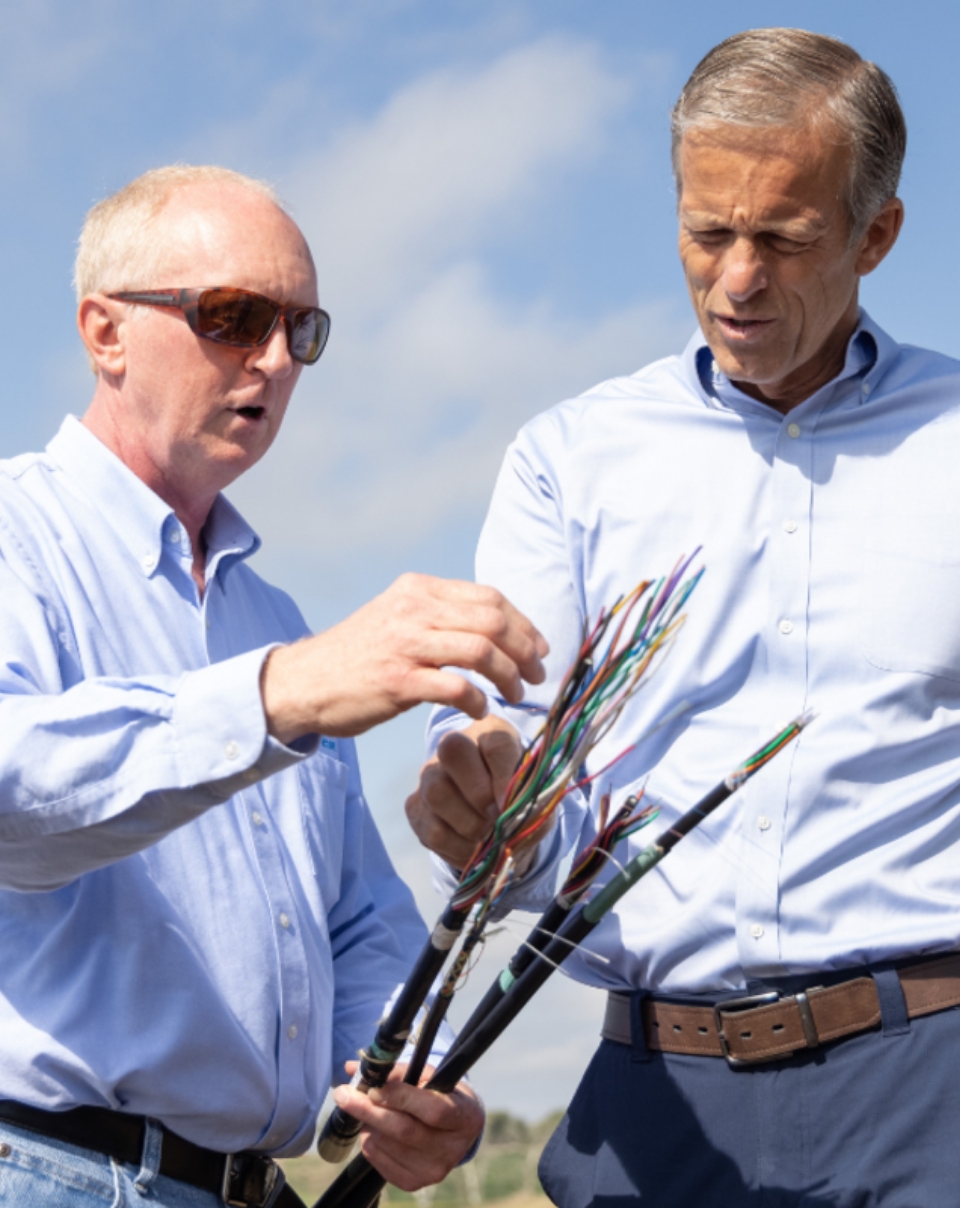
A Reliable Connection for Rural America
The internet has brought Americans a host of benefits – from a wealth of information to unparalleled convenience to new opportunities for commerce and education to new methods of communication. South Dakotans and other Americans who live in rural areas deserve access to high-speed broadband networks. Expanding internet access in rural America has long been a priority for me, and building and maintaining reliable networks across the United States has never been more critical. As the internet becomes more vital to everyday life, reliable broadband networks are an essential component to help rural Americans stay connected. I will continue to support broadband investment at the Federal Communications Commission to close the digital divide and ensure rural areas have access to the internet and are not only prepared for the internet of today, but for the innovation opportunities that are to come.
Artificial Intelligence
This new technology brings with it seemingly endless possibilities. It promises potentially tremendous advances in medicine, farming, and manufacturing. It can improve everything from national defense to daily life. But, as with any sophisticated technology, this next generation of AI also presents risks. The challenge, then, is how to encourage the promise of AI while ensuring there are basic safeguards in place to minimize potential dangers and disruptions to the workforce. I believe the light-touch approach the United States has taken on internet regulation is a good model to follow for AI, and leadership in AI will benefit our economy and make America more competitive, so we need to be sure we’re promoting innovation while protecting consumers from the riskiest applications of AI.
Holding Big Tech Accountable
I strongly believe that social media users should have more due process and transparency in how their content is being shaped and censored.
Today, big tech companies hold immense power because they, in many ways, filter the content that Americans see and consume online. These corporations have developed high-powered, opaque algorithms that learn online behavior and deliver customized results based on what we search, see, and share online. How they do it is largely unknown, making it impossible for users to know how their online experience is being shaped. These platforms have also started to act as the arbiters of truth by moderating and censoring user-generated political content – political speech, essentially.
I’ve been a long-time advocate for holding big tech accountable for its secretive content moderation and censorship practices. I’ve held multiple hearings on this topic over the years and have introduced several bipartisan pieces of legislation that would help strengthen online transparency and accountability. I will continue to be a tireless advocate for the American people who, again, deserve to know how their information is being treated by big tech.
Automated vehicles
Each year, more than 40,000 people die in automobile accidents, and more than 90 percent of those accidents can be attributed to human error. That’s why automated vehicles present an opportunity to make incredible safety improvements, and could drastically improve the quality of life for disabled and elderly Americans who often have reduced mobility. Given the potential I see in automated vehicles, I have long championed bipartisan legislative solutions for the safe testing and deployment of automated vehicles.
Advancing AV technology is not just a vehicle safety issue. It’s an issue of U.S. leadership and global competitiveness. While U.S. companies currently lead the world in AV technology, other nations like China are already acting boldly to take the lead. Investing in AV technology here in the United States not only strengthens the resilience of the auto industry, but also the nation’s industrial base and national security.
I will continue to work on efforts to harness the safety, quality of life, and economic benefits of this critical emerging technology.